Connecting Mobile Jackpot Hunts to Table Game Deals Through Robust Support and Flexible Payment Options
Clara Hoffmann · Jun 30, 2026
Connecting Mobile Jackpot Hunts to Table Game Deals Through Robust Support and Flexible Payment Options
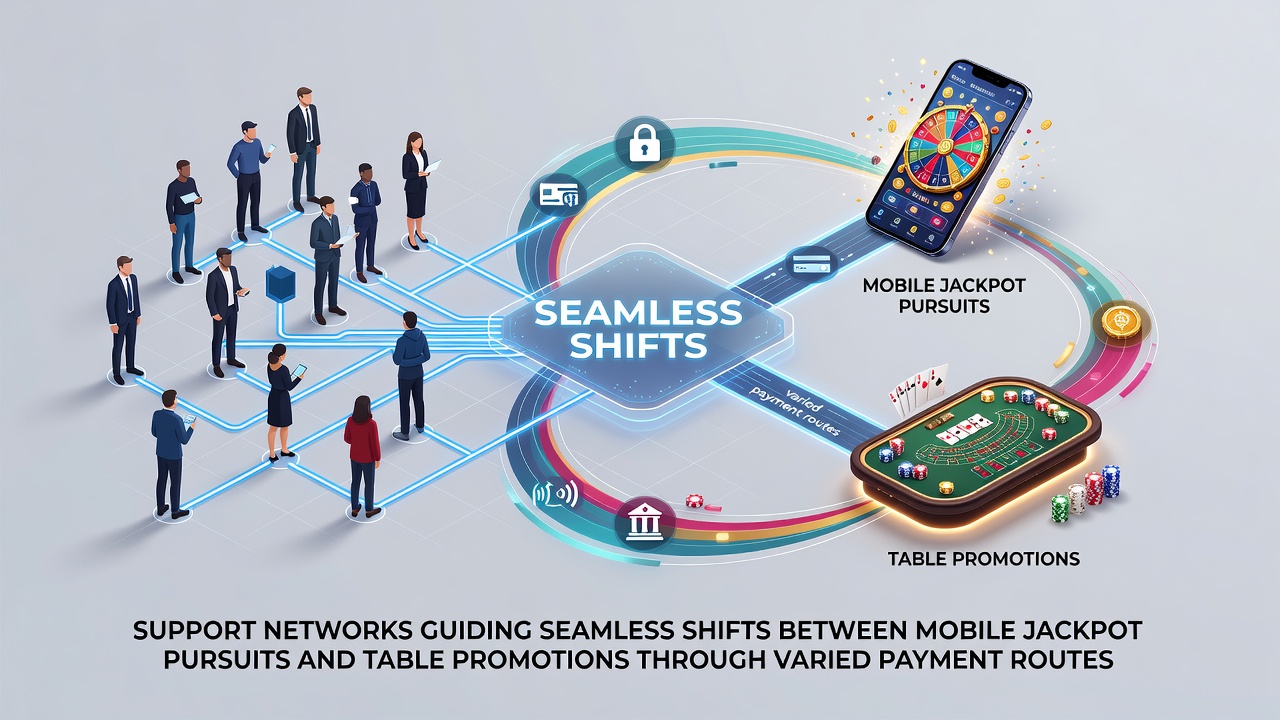
Support networks in online gaming environments handle the coordination required when players move from mobile jackpot pursuits into table promotions, and payment routes form a central part of that process. These networks consist of dedicated teams, automated systems, and integrated platforms that track account activity across devices while maintaining continuity in bonus eligibility and fund transfers. Data from the New Jersey Division of Gaming Enforcement indicates steady growth in cross-device play sessions throughout 2025 and into 2026, with June 2026 figures showing a 14 percent rise in players who combined mobile slots with live table options in the same login period.
Payment variety supports these shifts because operators deploy multiple gateways that accommodate instant deposits, scheduled withdrawals, and region-specific methods such as e-wallets, bank transfers, and prepaid cards. When a player finishes a mobile jackpot round and elects to enter a table promotion, support staff verify that the selected route processes the required balance without triggering separate verification steps that could interrupt momentum. Systems log each transaction against the same player profile, which reduces the chance of duplicate checks or delayed credits.
Payment Route Integration and Account Continuity
Operators maintain backend connections between mobile applications and desktop table interfaces so that balance updates appear in real time regardless of the entry point. A player who deposits via mobile wallet can immediately apply those funds to a table promotion because the payment processor routes the transaction through a unified ledger. Support networks monitor these routes for anomalies, stepping in when a method encounters temporary latency or when regional restrictions affect one channel but not another.
Studies compiled by the Canadian Gaming Association reveal that platforms offering at least four distinct payment categories experience higher session continuation rates when users switch game types. Those who studied transaction logs across multiple operators noted that seamless handoffs occur most often when support teams pre-authorize common payment combinations before players initiate the move.
Role of Support Teams During Game-Type Transitions
Support personnel receive training that covers both jackpot mechanics on mobile and the promotion structures attached to table games. When a player requests guidance on moving from one format to the other, agents reference account history to confirm that bonus terms remain compatible. They also supply step-by-step instructions for selecting the payment route that preserves promotional value, such as avoiding methods that carry extra fees or slower confirmation times.
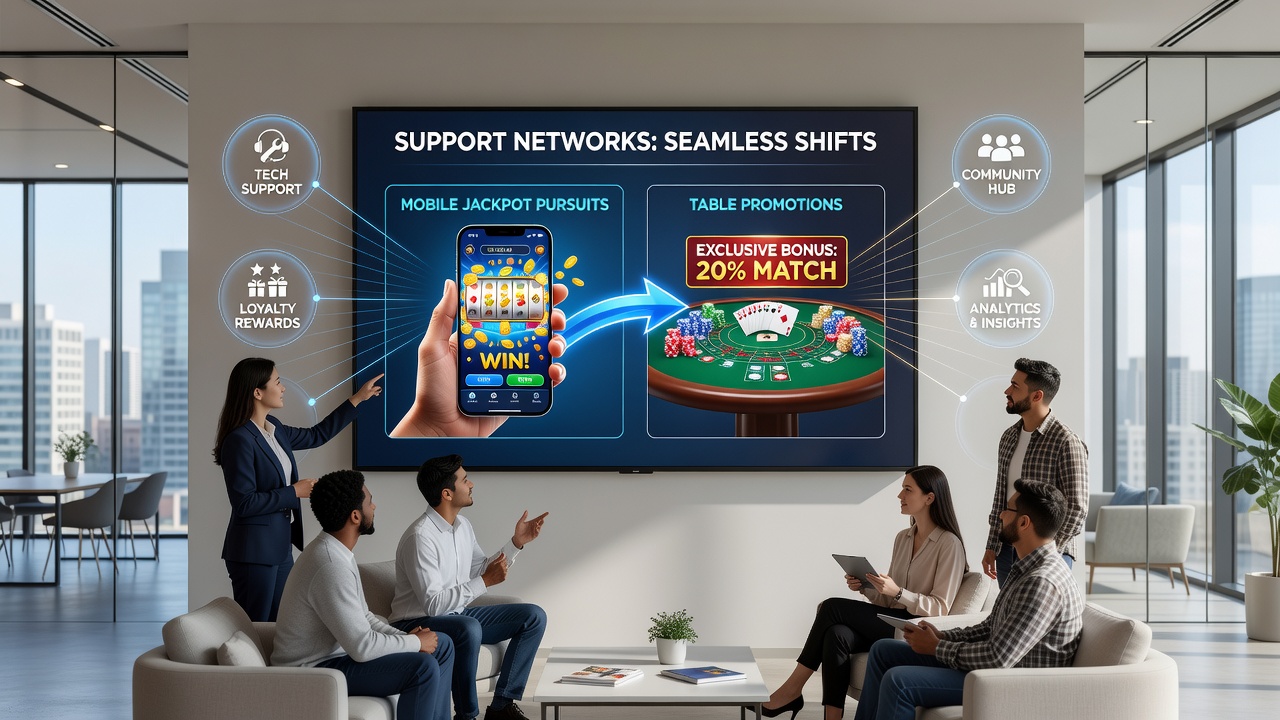
One documented case involved a European operator whose support logs from early 2026 recorded several thousand daily queries about switching between mobile progressive jackpots and roulette promotions. Agents resolved the majority within three minutes by confirming the active payment method and confirming that the promotion code carried over automatically. The same dataset showed that unresolved cases typically stemmed from payment routes that required additional identity verification, prompting operators to streamline those processes for recurring users.
Technical Infrastructure Supporting Cross-Format Play
Backend platforms employ API connections that link jackpot meters on mobile devices with table game servers, allowing promotional credits to transfer without manual intervention. When June 2026 regulatory updates in several jurisdictions required enhanced transaction reporting, operators expanded these APIs to include automated compliance flags that support teams could review in a single dashboard. This reduced the time needed to clear a player for a table promotion after completing mobile jackpot activity.
Research published by the University of Nevada, Las Vegas International Gaming Institute examined payment route efficiency across 12 operators and found that unified ledgers cut average transition time from 47 seconds to 19 seconds. The study also recorded that players who encountered no payment friction completed at least one additional game type change per session on average.
Regional Payment Preferences and Support Adaptation
Support networks adjust their protocols according to regional payment norms. In markets where bank transfers dominate, teams prepare documentation templates that address common verification questions in advance. In areas favoring digital wallets, agents focus on confirming wallet-to-wallet transfers so that funds reach table promotions without leaving the operator’s ecosystem. Observers note that operators maintaining region-specific support queues achieve faster resolution rates when payment routes differ between mobile and table environments.
Industry reports compiled by the Australasian Gaming Council in mid-2026 highlighted that operators providing in-app chat alongside traditional support channels recorded higher satisfaction scores during format transitions. The reports attributed this to the ability of agents to view the player’s current screen and payment selection simultaneously.
Conclusion
Support networks that coordinate mobile jackpot pursuits with table promotions rely on integrated payment systems, trained personnel, and real-time account monitoring to maintain continuity. Data from multiple regulatory and academic sources show measurable improvements in session flow when these elements operate together. As platforms continue to expand device options and payment categories, the same infrastructure remains central to handling player movement across game types without interruption.